

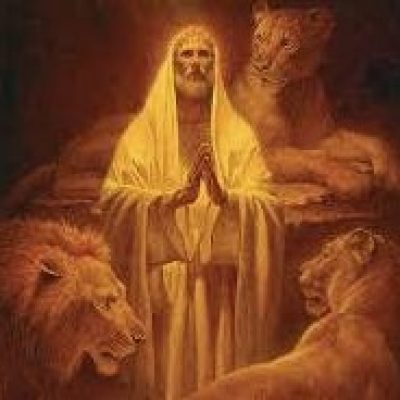
Daniel 9:1-19
We are going to read some verses from Daniel chapter 9, verses 17 through 19. This is the end of Daniel’s prayer in Daniel 9. And we are going to look at the whole thing in a little bit but let me just read the close. Now, our God, hear the prayers and petitions of your servant.
For your sake, Lord, look with favor on your desolate sanctuary. Give ear, our God, and hear and open your eyes and see the desolation of the city that bears your name. We do not make requests of you because we are righteous, but because of your great mercy.
Lord, listen. Lord, forgive. Lord, hear and act.
For your sake, my God, do not delay, because your city and your people bear your name. Well, if you have been with us, you’ll remember we’re working our way through Daniel. And last week we went through a challenging passage, Daniel chapter 7, I believe it was.
And we’re going to look at Daniel chapter 9 this morning. And it’s entitled, Learning to Pray Like Daniel. And so, Daniel chapter 9 is one of the most interesting chapters in all the Bible.
The first 19 verses are a prayer that Daniel prayed over 2,500 years ago. And the last part of the chapter is a vision that God revealed to Daniel about 70 weeks. And it really unpacks history and unpacks the future.
We’ll take a look at that next week. The first 69 of those 70 weeks are really 70 years. It’s a period of 490 years.
69 of those 70 time periods have been fulfilled. There’s one yet to come. And that was revealed to Daniel in the second part of Daniel chapter 9. But this morning we’re going to look at learning to pray like Daniel.
So, I ask the question, how do we learn to pray? Well, we can learn to pray from Scripture. Jesus gave the disciples the Lord’s Prayer, the disciples’ prayer.
When the disciples asked him this question, Lord, would you teach us to pray? Teach us how to pray. And Jesus gave them this prayer. You know it.
Our Father who art in heaven, holy is your name. Thy kingdom come; thy will be done on earth as it is in heaven. And you know the rest of that prayer.
We can learn to pray through studying that prayer. We can learn to pray by listening to the prayers of others. I grew up in a pastor’s family and so I’ve been in church my whole life.
I’ve been in thousands of prayer meetings and small prayer groups. And one of the ways that I learned to pray was in praying in small groups with others and listening to how other people prayed. But we can also learn to pray simply by praying, by doing it ourselves.
Prayer is simply talking to God. He wants to hear what’s on our heart. And there’s nothing too small to bring to his attention.
He already knows it. He wants to hear the concerns on our heart. But this morning we also can learn to pray by studying some of the prayers of the Bible.
There are some great prayers in the Bible and Daniel 9 is one of them. Now think about this opportunity we have to come into God’s presence. And the book of Hebrews says we can come boldly into God’s presence. We have this awesome privilege of coming into what? The very presence of God Himself. And He invites us to come into His presence.
So, this morning we’re going to look at this prayer from Daniel chapter 9. And let me remind you that the life of Daniel was characterized by prayer. From a teenager, he was one who learned how to pray. Remember, Daniel and his friends were taken exile by the Babylonians as a teenager and taken 900 miles away from home.
And he was being indoctrinated into the Babylonian culture. And Daniel was a young person who learned to pray. In Daniel chapter 2, you remember that Daniel became one of the wise men that was an advisor to King Nebuchadnezzar, the Babylonian king.
And remember, King Nebuchadnezzar had this dream, and nobody could interpret it. So, he said, all my advisors and wise men are going to be killed, including Daniel and his friends. And how did Daniel respond? It says, Daniel, in Daniel 2.17, returned to his house, explained the matter to his friends.
He urged them to plead for mercy from the God of heaven concerning this mystery so that he and his friends might not be executed. You want to ramp up your prayer life? Daniel’s life was on the line. He was going to die unless God revealed that dream to him.
And Daniel said, let’s pray. And God revealed the dream to him. Daniel chapter 6, when now the Medo-Persian Empire is the world power and now they’re trying to find something wrong with Daniel because they don’t like Daniel.
And so, they passed this law, you can’t pray to anybody else other than the king for 30 days or you’re going to be thrown in the lions’ den. And what does Daniel do? Daniel 6.10. Now, when Daniel learned that the decree had been published, he went to home to his upstairs room where the windows open toward Jerusalem. And three times a day, he got down on his knees and prayed, giving thanks to God, just as he’s done before.
Nothing changed. Daniel just continued to pray. And here in Daniel chapter 9, we’re going to discover that Daniel again is praying.
I. The Setting
And so, let’s look at the outline of this passage here from Daniel 9. First of all, the setting. Here it is, Daniel 9, verse 1. In the year of Darius, son of Xerxes, a Mede by descent, who was made ruler over the Babylonian kingdom, in the first year of his reign, I, Daniel, understood from Scripture, according to the word of the Lord given to Jeremiah the prophet, that the desolation of Jerusalem would last for 70 years. So, here’s the setting.
We have the exact date of when this took place. This is the first year of the reign of King Darius. King Darius was the first king of the Medo-Persian Empire.
The Babylonian Empire had come to a conclusion, and the year is 539 B.C. The transfer of power is taking place. And so, Daniel, that’s the setting. It’s 539 B.C. And what’s Daniel doing in verse 2? We already read it.
He’s been reading his Bible. No, he doesn’t have the complete Bible like we have, obviously. But he’s reading some of the Old Testament.
And the Scripture says he’s reading from the prophet Jeremiah, who wrote the book of Jeremiah about 50 years previous to Daniel’s time. And let’s see what he discovers as he reads Scripture from the book of Jeremiah. Remember, they’re still in Babylonian, they’re still in captivity here.
II. The Scriptures
And we read in verse 2, Daniel understood from the Scriptures, according to the word of the Lord given to the prophet Jeremiah, that the desolation of Jerusalem, the captivity of God’s people by the Babylonians, would last for 70 years. Oh, Daniel’s reading Scripture, and all of a sudden, he’s understanding the times in which he lives, and what’s he understanding? He’s understanding that God says that, yes, the Babylonians will take Israel captive, they’ll be in exile, but it’s only going to last for a certain period of time. How does he know that? Because that’s mentioned at least twice in the book of Jeremiah.
Let me just go to Jeremiah chapter 29 and read verses 10 and 11. So this is what Daniel is reading from Jeremiah chapter 29, verses 10 and 11. This is what the Lord says, When 70 years are completed for Babylon, I will come to you and fulfill my good promise to bring you back to this place.
So, they’re not going to be in Babylonian captivity forever, it’s only going to last for 70 years. And verse 11 is that familiar verse that many people have as their life verse, For I know the plans I have for you, plans to prosper you and not to harm you, plans to give you hope and a future. So, all of a sudden Daniel’s reading this and he’s realizing, and maybe he’s doing a little math in his mind, because Daniel was probably 15 when the first exiles were taken from Jerusalem.
Daniel is now probably 81 years old or 82 and he’s doing the math. And what he’s thinking is, Babylonian captivity is almost over. It’s only going to last for 70 years.
And what does Daniel do with that information? It’s interesting here. Daniel prays. And that’s the next part of our outline, it’s the supplication.
So, the setting, the scriptures, he reads in Jeremiah 25, Jeremiah 29, that the captivity is only going to last for 70 years. And so, he prays. Let’s look at it in verse 3, beginning in verse 3. And notice the character intensity of his prayer.
So, I turn to the Lord God and pleaded with him in prayer and petition, in fasting, in sackcloth and ashes. Daniel’s serious about this prayer. And it says he’s turning to God, he’s pleading to God, he’s fasting, it means he’s not eating, to focus on prayer.
Sackcloth, wearing coarse, uncomfortable garments. Ashes, a symbol of mourning and humility. And Daniel is going to pray this prayer and he’s interceding on behalf of God’s people.
This entire nation that is in captivity, been in captivity for a long time. Now we might ask the question, if Daniel understands from Scripture the promise that God’s going to end the captivity in 70 years, then why even bother praying about it? If God said it’s going to happen, it’s going to happen. So why does Daniel pray? And let me just read for you a couple paragraphs from David Jeremiah’s commentary on Daniel.
It’s entitled, The Handwriting on the Wall. When Daniel read in the book of Jeremiah that God was going to keep his people in captivity for 70 years and then release them, he believed it. Then a very strange thing happened.
He began to pray that God would do what he was going to do. Wait a minute, if God’s going to do it, why should we pray? At this point we discover one of the most tremendous principles about prayer. God knows his plan and even when he reveals his plan to us, he expects us to pray over that plan.
Sometimes I get the impression I have misunderstood the meaning of prayer. Prayer is not to get God to change his will. If we really believe the will of God is perfect, then why would we want him to change it? Our prayers really ought to be prompted out of a deep understanding of what the will of God is.
And that was part of the Lord’s prayer. Thy will be done on earth as it is in heaven. What we’re praying for is we want God’s will to be accomplished in our lives and in our church and in our nation.
And so, here’s this long prayer that Daniel prays. And I want to look at it through the lens of an acrostic. And this is just a way to help us think about a pattern for prayer.
You won’t find this in Scripture, but it’s from studying Scripture and looking at how different people prayed. This is how Nehemiah prayed in Nehemiah chapter 1 when he was concerned about rebuilding the walls of Jerusalem. And this is the outline of Daniel’s prayer.
III. The Supplication
And the acrostic is Acts, A-C-T-S. Maybe some of you have heard this. It’s a very simple pattern for prayer.
A stand for adoration or worship. You start out your prayer by worshiping who God is and the greatness of God. The C stands for confession.
Confession of sin. The T stands for thanksgiving. And the S stands for supplication.
In other words, here’s my request now, Lord. Here’s what I’m asking you to do. So, let’s look at Daniel’s prayer through that lens this morning as kind of a template for prayer.
And let’s look at it in Daniel chapter 9. Here’s verse 4. I prayed to the Lord my God. Notice this is personal. And confessed.
Here’s now adoration. And we’ll just hit the highlights here. Lord, the great and awesome God.
I’m praying to the great and awesome God of the universe. We sing about that, don’t we? Our God’s an awesome God. Great and mighty is the Lord our God.
Great and mighty is He. That’s how Daniel starts. Lord, you are a great God.
You are an awesome God. He goes on to say, you keep your covenant of love with those who love Him and keep His commandments. You’re a covenant-keeping God.
You keep your promises. You keep your word. You’re a God who, Titus 1-2 says, cannot lie.
So, God, you’re great. And you’re awesome. And you’re a promise keeper.
Verse 7, Lord, you are righteous. You are holy in righteousness. Verse 14, Daniel prays.
Verse 9, the Lord our God is merciful. Oh, you’re not only a God of grace, giving us what we don’t deserve, but you’re a God of mercy. You withhold what we do deserve.
And God, verse 9, you’re a forgiving God. Praise God for that. God is a God who forgives our sins.
God, you are merciful, and you are forgiven, even though we have rebelled against you. He goes on to say in verse 11-14 that God is just. Let me read that portion there.
All Israel has transgressed your law and turned away, refusing to obey you. So, we’re in captivity. Why are we in captivity? Because you are a just God.
You are a God of your word. And we could go back to Deuteronomy 28, where God says to Israel, if you follow me and obey me, you’re going to experience all these blessings. But if you rebel against me, you’re going to experience all these curses.
And one of that curses, part of that passage, is you’re going to be in captivity because you’ve not followed me. And so, what’s Daniel saying here? We’re getting what we deserve here. Therefore, the curses and sworn judgments written in the law of Moses, Deuteronomy 28, have poured out on us.
Why? Because we have sinned against you. You have fulfilled the words spoken against us and against our rulers by bringing on this great disaster. Under the whole heaven, nothing has ever been done like what has been done to Jerusalem.
Just as it’s written in the law of Moses, all of this disaster has come on us. Yet we have not sought the favor of the Lord our God by turning from our sins and giving attention to your truth. The Lord did not hesitate to bring the disaster on us.
The Lord our God is righteous in everything He does. Yet we have not obeyed. And so, Daniel, throughout his prayer, he starts by talking about who God is and worshiping God.
God, you’re great. God, you’re awesome. You’re holy.
You’re righteous. You’re just. You’re merciful.
You’re forgiving. And then he goes into confession. And here’s Daniel, who was a just, upright person, not perfect, a sinner like all of us.
But notice when Daniel is confessing the sins of God’s people, he doesn’t say, look at what God’s people have done. He says, look what we have done. And if you trace the word, we through his prayer in these verses, you’ll find it’s there 16 times.
That’s something that the prophets always did. They always identified with the sins of God’s people as they were interceding on behalf of God’s people. And so let me just point this out.
Verse five, we have sinned and done wrong. We have been wicked and rebelled. We have turned away from your commands and laws.
We have not listened to your servants, the prophets. And he goes on and on 16 times. This is this is what we have done.
And so, he’s confessing the sins of God’s people who had rebelled against God and not followed his teaching and his law. And really, that’s a key for where we are as a country. If genuine change is going to come to the United States of America, it’s going to come from the pews and the pulpit.
Realizing where we are as a nation and asking God to forgive us. Asking God to turn our nation around. In fact, that’s the formula that’s given in Second Chronicles.
I’m sure you’re familiar with it. Second Chronicles 714 often quoted passage of Scripture. It’s part of Solomon’s prayer at the dedication of the temple.
If my people, Christians, who are called by my name will humble themselves and pray and seek my face and turn from their wicked ways, then I will hear from heaven and I will forgive their sin and heal their land. God’s people will acknowledge their sin and turn from it. Then God will begin to bless and intervene.
Adoration, confession, thanksgiving. Where’s thanksgiving in this prayer? It doesn’t jump out at you, but as I look at it, notice what Daniel prays in verse 15. Now Lord our God, who brought your people out of Egypt with a mighty hand and who made for yourself a name that endures to this day.
What’s Daniel doing? He’s looking back in Israel’s history and he’s thanking God for what? Deliverance from Egypt. And the ten plagues, remember? And the crossing of the Red Sea. And it was really Israel’s kind of declaration of Independence Day.
They had been in Egyptian bondage for 400 years. Now we’ll celebrate as a nation birthday number 249 as the United States of America. Israel was in Egyptian bondage for 400 years.
And then God raised up Moses and delivered them from the Egyptian bondage. And so, Moses, or Daniel, is looking back to what God did with Moses and the Israelites and thanking God for that. Basically saying, if you delivered us from 400 years of Egyptian bondage, you can do it again, God, because you’ve done it in the past.
And so, as we move through this prayer, now after Daniel worships God and confesses sin and gives him thanks, now he begins to make some requests. Okay, God, this is what’s on my heart. And it’s the supplication part.
And it’s found in verses 16 through 19. As the prayer closes, Lord, in keeping with all your righteous acts, here’s what he’s asking. Turn away your anger and your wrath from Jerusalem, your city, your holy hill.
Our sins and the iniquities of our ancestors have made Jerusalem and your people an object of scorn to all those around us. Now, Lord, here he’s asking again, hear the prayers and petitions of your servant. For your sake, Lord, look with favor on your desolate sanctuary.
Give ear, our God, and hear. Open your eyes and see the desolation of the city that bears your name. We do not make requests of you because we are righteous, but because what? Your great mercy.
Here it is. Lord, listen. Lord, forgive.
Lord, hear and act for your sake, my God. Do not delay because your city and your people bear your name. There’s some urgency to that prayer.
That’s how God wants us to pray. He says, you need to come boldly into God’s throne. Who can do for us more than we can even ask or imagine? That’s how the prayer ends, with supplication.
And what happens? Well, we’ll look at it probably next week. God now begins to reveal to Daniel how he’s going to act. And God begins to intervene in Daniel’s life and the nation of the Israelites and their captivity.
Life LesSons from Daniel 9
This is in our last 10 minutes or so here. Let’s just think about some life lessons, what we can learn from this prayer here in Daniel chapter 9. Here’s the first one. It’s the importance of reading and understanding the scriptures.
This all came about because Daniel’s reading God’s word. He’s reading the book of Jeremiah, and he discovers this wonderful prophecy. Seventy years, and then God’s going to free the exiles.
And that motivates Daniel to pray. But as we read in Daniel 9 too, it says, during this time period, I, Daniel, understood from the scriptures. And so, it’s the great importance of not only reading God’s word, but it’s understanding God’s word.
2nd Timothy 2:15, the verse says, approved workmen are not ashamed, one who rightly divides the word of truth. It means correctly handles. The word is really orthodontics.
You’re cutting it straight. And so, when you read scripture, you have to understand there’s one meaning to the text. There’s one original meaning to the text.
Now, there could be many applications, but there’s one meaning. And we need to understand through study what that meaning is. And Daniel was reading.
He not only read, but he understood. It had significance in his life. I believe God’s given us some help to understand the Bible.
God’s given us the Holy Spirit. And he lives within us. And when we read scripture, one of the jobs of the Holy Spirit, and we can ask him for his help, is to help guide us unto truth.
Help me understand this passage. That’s part of the job description of the Holy Spirit who lives within us. We also have pastors and teachers that can help us understand.
We have mature Christians who have been walking with Jesus for a long time who can help us to understand. And so, it’s important to understand the scriptures. There’s lots of illustrations of that.
One’s in Nehemiah 8. We won’t take time to read that passage but let me just go to Acts 8 in the New Testament. You remember this story. There’s an Ethiopian government official, and he’s traveling in his chariot, and he’s reading the Old Testament scrolls, and he’s reading from Isaiah.
He’s reading Isaiah 53. And God comes to Philip, and he says, Philip, run up to that chariot because I’ve got a job for you to do. And he joins the Ethiopian who’s reading the Bible, the prophetic text in Isaiah 53 that prophesies the Messiah.
And Philip asks, do you know what you’re reading? Do you understand? He goes, I have no clue what this is talking about. Let me help you understand this. Philip jumps in the chariot, and he opens up the meaning of Isaiah 53.
And the Messiah, the Ethiopian, comes to faith in Jesus. And so, it’s the importance of understanding the scriptures, and that really was the basis of Daniel 9, who was reading from Jeremiah. But our second and last application here this morning is that we need to learn to pray like Daniel.
I need to learn to pray like Daniel. So let me give you three words that describe Daniel’s prayer life. One, it was frequent.
Daniel was frequently praying, and we looked at it in Daniel 6, verse 10, that they passed this law, and he’s three times a day, he’s praying, Daniel prayed frequently.
That’s how God wants us to pray. Pray without ceasing. You can have this mental conversation with God all day long. And He’s there and He listens, and he hears. Ephesians chapter 6 talks about the armor of God and as that passage concludes in Ephesians chapter 6 verse 18, the Apostle Paul concludes with these words, and pray in the Spirit on occasions with all kinds of prayers and requests. With this in mind, be alert and always keep on praying for all of the Lord’s people.
And so here we are at the beginning of a new year and if you’re like me, sometimes our prayer life gets a little in the doldrums. And God says, I want you to pray frequently. That verse in Revelation chapter 3 verse 20, Behold, I stand at the door and knock toward the Christians if any man, hear my voice and open the door I’ll come in and have fellowship with him.
What’s that a picture of? God wanting to have our time and attention. And so, God wants us to pray frequently. God also wants us to pray fervently, fervently.
Look at Daniel here, it says he’s pleading with God. He’s fasting. He has sackcloth and ashes, and he is fervently praying to God on behalf of God’s people.
The effectual fervent prayer of a righteous person is what? Powerful and effective. And so, we need to learn to pray like Daniel. We need to learn to pray frequently.
We need to learn to pray fervently. Last one, we need to learn to pray factually, factually. Daniel identified with the sins of his people because Daniel was a sinner himself.
1 John 1, 9 says, if we confess our sins, the word confess means in the Greek homologeo, it means to say with God the same thing that God says about sin. He’s faithful and just to forgive us our sins. See, in our culture today, we’ve softened sin, and we’ve come up with all sorts of excuses and all kinds of words.
We need to understand what God’s standard is and understand what God says about sin.
I believe if Daniel were going to pray today, and this was written 30 years ago, this might be how Daniel would pray, here’s the prayer. Oh God, we know that your word says, woe to those who call evil good, but that’s exactly what we’ve done.
We have lost our spiritual equilibrium and inverted our values. We confess that we have ridiculed the absolute truth of your word and called it moral pluralism. We have worshiped other gods and called it multiculturalism and new age spirituality.
We have committed adultery and called it an affair. We have endorsed perversion and called it an alternative lifestyle. We’ve exploited the poor and called it the lottery.
We have neglected the needy and called it frugality. We have rewarded laziness and call it welfare. We have killed our unborn children and called it choice.
We have neglected to discipline our children and called it building self-esteem. We have failed to execute justice speedily as your word commands and called it due process. We have failed to love our neighbor who has a different color of skin and called it maintaining racial purity.
We have abused power and called it political savvy. We have coveted our neighbor’s possessions and called it ambition. We have polluted the air with profanity and pornography and called it freedom of expression.
We have made the Lord’s Day the biggest shopping and entertainment day of the week and call it free enterprise. We have ridiculed the time-honored values of our parents and called it enlightenment. Search us, oh God, and know our hearts today.
Try us and see if there’s some wicked way in us. Cleanse us of every sin and set us free. Though our sins be as scarlet, may they become white as snow.
Though they be as crimson, may they be as wool. But that’s what I mean when we need to pray factually and admit what sin is and call sin, sin and confess it.
I think it’s appropriate as we come to the Lord’s table, and that’s how we’re going to conclude this morning. If you know Christ as your Savior, it’s his invitation to you to come and observe the bread and the cup as a way of remembering what he did for us on the cross. But in that passage in 1 Corinthians 11, where Paul’s writing about communion, he says, let a man examine himself.
And so, he encourages us to take some inventory before we rush into the Lord’s table and examine our spiritual walk and where we are with God. Six questions that I’m just going to share that maybe we can examine our hearts with this morning.
Question number one, where am I spiritually compared to a year ago? Where is my spiritual life today, January 12, 2025, as opposed to January 12, 2024? Number two, am I more or less sensitive to sin in my life? Do I have a sensitivity to what the Bible calls sin and the prodding of the Holy Spirit in my life? Number three, when was the last time I was genuinely excited to read God’s Word? When was the last time I was excited to get into God’s Word and to see what He has to say to me today? Number four, do I have anyone in my life who will challenge me spiritually? Have anybody that’s going to kind of hold my feet to the fire and hold me accountable? I’d never designed the Christian life to be lived as a lone ranger. It’s always within community.
Is there anybody in my life who will challenge me spiritually? Number five, when was the last time I confessed sin or was honest about a spiritual struggle? Number six, do I feel more distant from God but less concerned about it? I thought those are great questions. Great questions to think about and to take some inventory. This morning, we need to learn to pray like Daniel.
I need to learn to pray like Daniel, who prayed often, frequently, who prayed fervently. And who prayed actually.